
A systematic withdrawal plan (SWP) is a way to redeem units from an existing investment at chosen intervals, if the fund offers that facility. This calculator tests how a starting corpus might change under a constant return assumption and regular withdrawals. Market returns and NAV do not arrive evenly, so the result is a scenario, not a safe withdrawal amount or a promise of lasting income. Check the chosen scheme’s redemption and SWP terms before relying on the illustration.
SWP Calculator Nepal
Systematic Withdrawal Plan · Plan regular withdrawals from your NEPSE mutual fund corpus
The return is a scenario assumption, not a forecast. Compare lower-return cases.
Check the chosen scheme for SWP availability, cut-off times and settlement.
| Period | Opening (रू) | Modelled Return (रू) | Withdrawn (रू) | Closing (रू) |
|---|---|---|---|---|
| Click Calculate to see breakdown | ||||
📖 SWP Rules for Nepal Mutual Fund Investors
- SWP (Systematic Withdrawal Plan) lets you withdraw a fixed amount regularly from your mutual fund corpus. The remaining amount continues to earn returns at the prevailing NAV.
- In Nepal, SWP is available in open-ended mutual funds regulated by SEBON (Securities Board of Nepal). Availability differs by scheme; confirm whether your chosen fund actually offers recurring redemptions.
- Confirm the scheme’s NAV cut-off, settlement schedule and charges before submitting a redemption.
- Minimum SWP amount varies per fund. Check with your registrar (NIBL Ace Capital, NMB Capital, Nabil Invest, etc.).
- Capital gains tax may apply to a redemption depending on current law and the investor’s circumstances. Consult a financial advisor for tax planning.
- Constant-return scenario: A level or growing balance in this model depends on the assumed return arriving every period. Market losses and sequence risk can make the actual corpus fall.
⚠️ For illustration only. Actual returns vary with market conditions. Not financial advice. Read all scheme documents before investing.
How to use SWP Calculator
Use the inputs below to compare withdrawal scenarios. Change one assumption at a time, including a lower or zero-return scenario. The calculator does not model losses, which can reduce the corpus faster.
Step 1: Enter Your Initial Corpus (NPR)
Enter the current value of the units you plan to draw from. This is the starting corpus for the illustration, not collateral and not a guaranteed principal balance.

Step 2: Set Your Monthly Withdrawal (NPR)
Enter the amount you hope to withdraw each period. A larger withdrawal usually reduces the corpus faster, especially when returns are weak or negative.

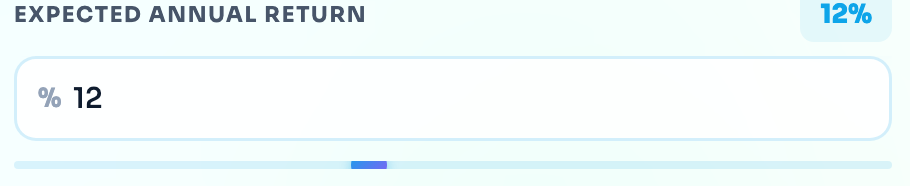
Step 3: Input the Expected Annual Return (%)
Choose an annual return solely as a test assumption. The calculator applies it evenly, while real mutual fund NAVs fluctuate. Do not treat the default rate as a historical average or forecast; compare several rates, including a poor-return case.
Step 4: Select Your Withdrawal Frequency
Choose how often you want to model withdrawals. Actual availability, minimum amounts, NAV cut-off times, settlement and fees depend on the scheme and fund manager. Confirm those terms in the current scheme documents.

Step 5: Hit Calculate!
Select Calculate SWP to see the projected balance and withdrawals under your inputs. If the tool shows that the corpus can be maintained under a constant assumed return, that is only a mathematical scenario; a run of lower or negative returns can deplete it.
Review the year-by-year balance as well as the headline result. Real redemptions may also involve taxes, fees and NAV timing that this simple model does not capture.
This is an educational projection, not a guaranteed income plan. Verify scheme-specific withdrawal terms with the fund manager and consider professional advice for a personal plan.