You did the hard part. You researched the best mutual funds, set up your Demat account, and finally automated your monthly payments. The money is leaving your bank account every single month. But after a few months, a very natural question pops into your head: where is it all going, and how much is it worth now? Figuring out exactly how to check my sip portfolio is an essential skill for any investor who wants to stay on top of their financial game.
The good news is that you don’t need to call your bank or visit a broker’s office to see your money. Everything in Nepal’s capital market is entirely digitized now. Therefore, let’s walk through the absolute easiest ways to monitor your mutual fund investments. Next, you can track your growth and understand what the numbers actually mean.
Method 1: Using the Capital Manager’s Dedicated Portal
The absolute best and most detailed way to track your wealth is by visiting the capital manager website. Every capital manager has the user portal from which the investor can create a user to take control over their fund (like Nabil Invest, NIMB Ace Capital, or Siddhartha Capital).
If you are asking how to check my SIP portfolio and see my actual profit percentage, this is the place to go.
Check NI31 & Nabil Flexi Cap Fund SIP using Nabil Investment Portal
Here’s the Process used in Nabil Investment Banking for NI31 and Nabil Flexi Cap Fund,
Desktop View:
- Visit the Nabil Investment Banking mutual fund portal, click here,
- Find the Portfolio Menu and tap on Holdings,
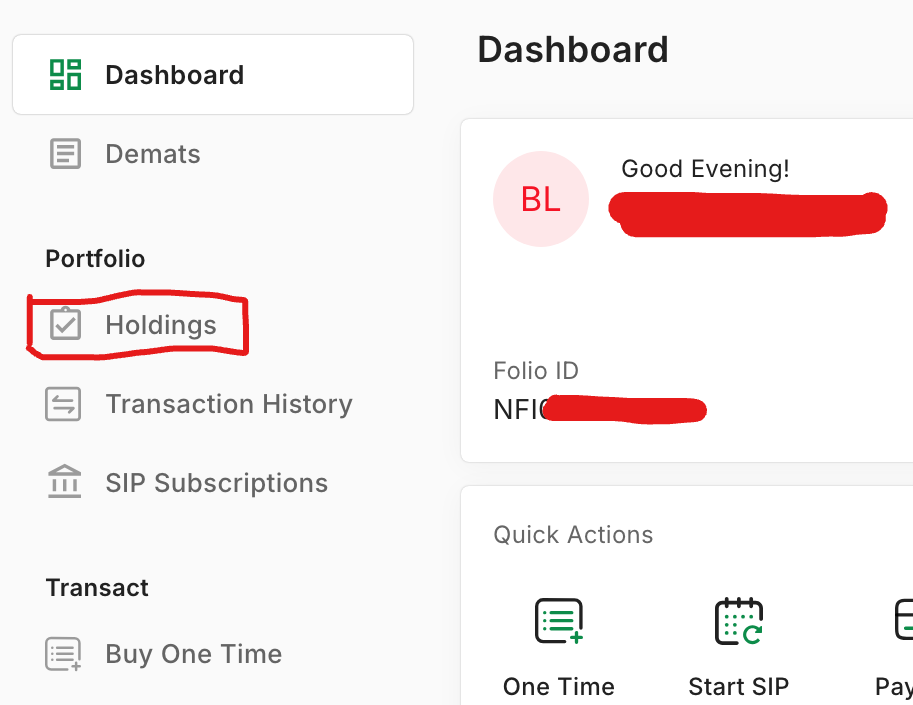
- Here you will see all the SIP Holdings of all purchased Units (Paid SIP),

- That’s all.
Mobile View:
- Visit the Nabil Investment Banking mutual fund portal, click here,
- From the dashboard/home screen of the page tap on Option (Three lines showing in left side),
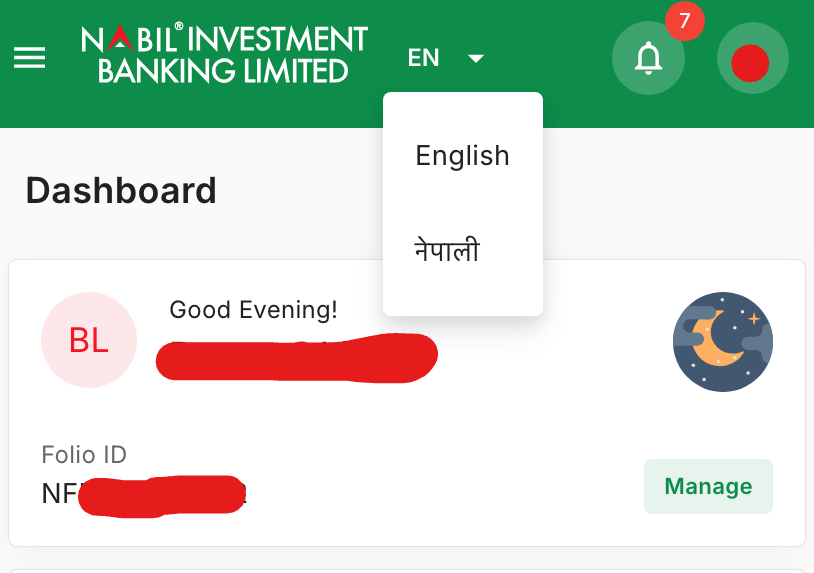
- Now tap on Holdings showing under Portfolio section,
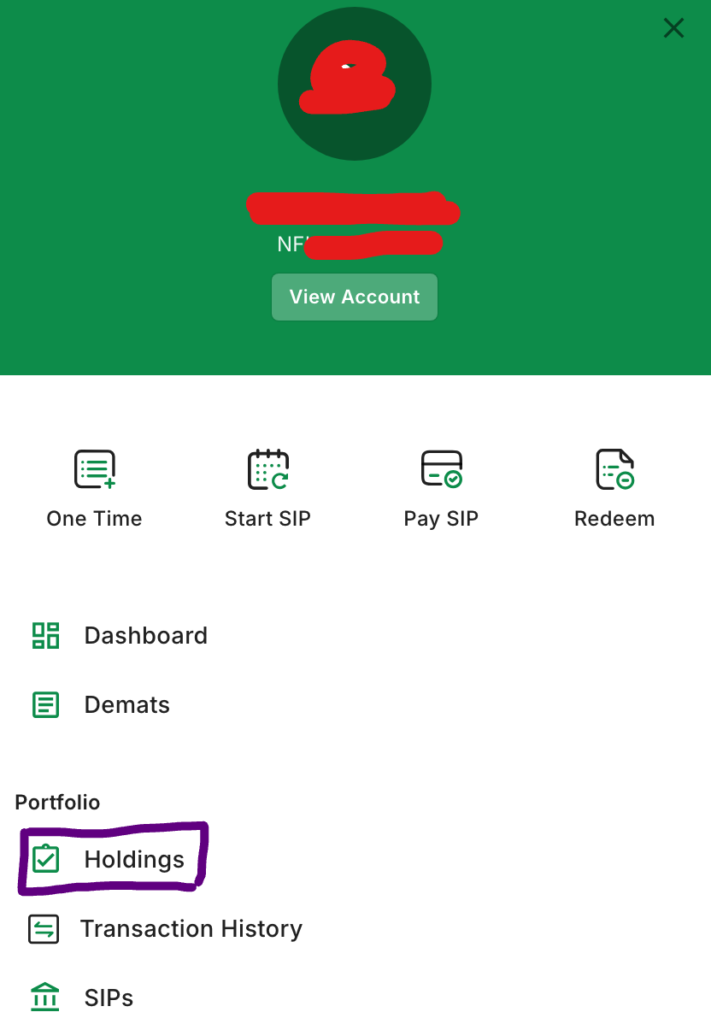
- That’s here you will get your all subscribed SIP Plan details.
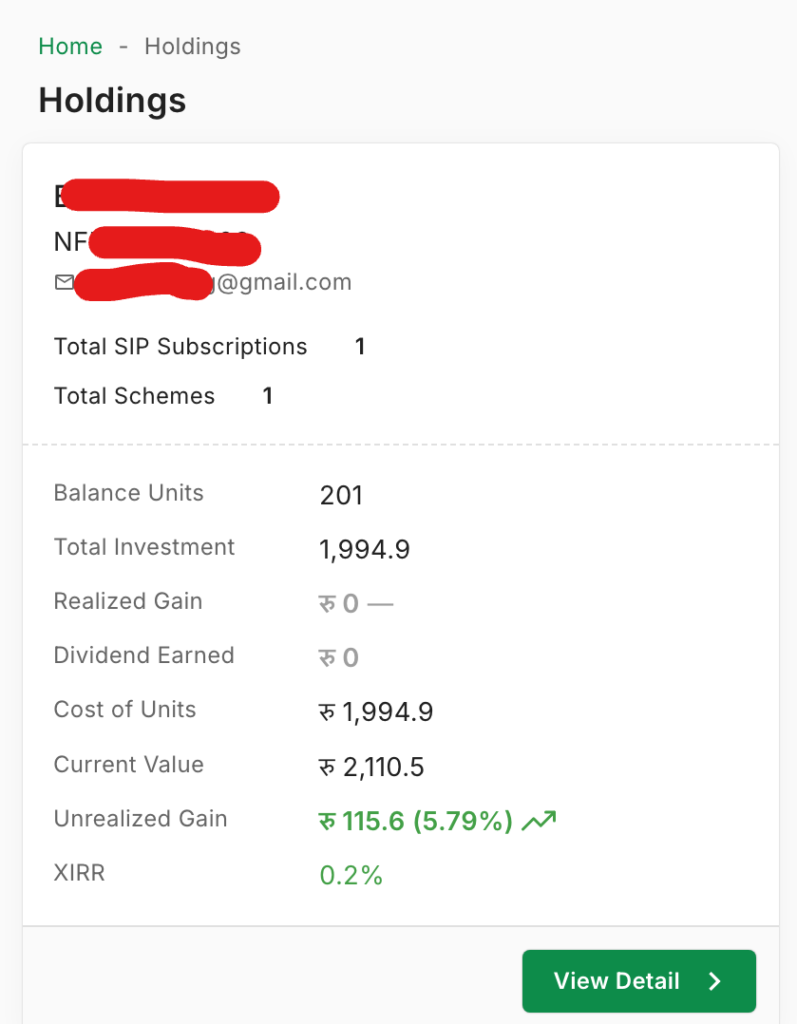
NMB Saral Bachat Fund-E SIP using NMB Capital
- Visit the NMB Capital’s Mutual Fund site, click here,
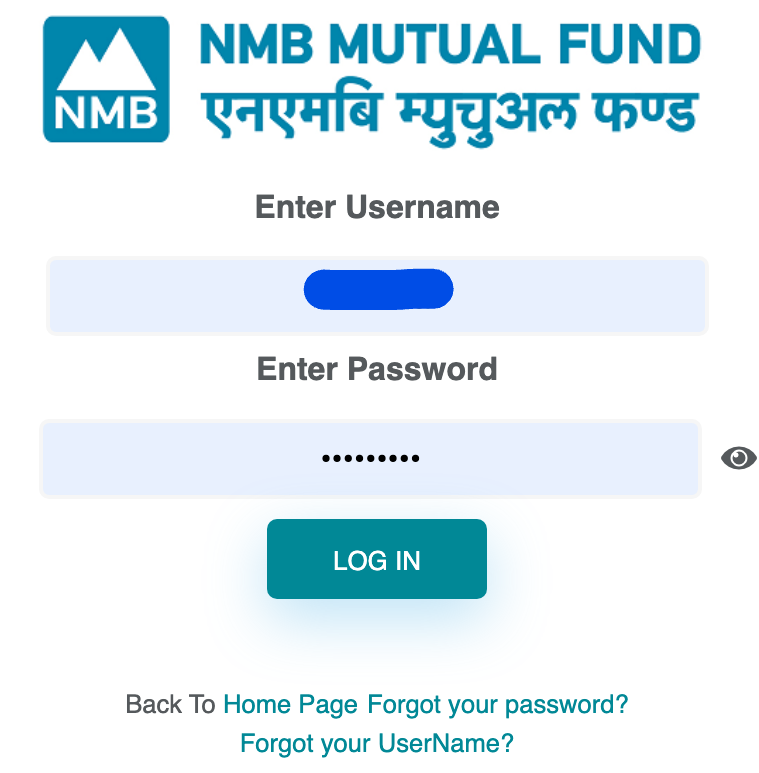
- Tap/click on Login, and enter the username and password that you set and then tap on LOG IN, (if not then you have to create a login account from NMB Capital’s site),
- After logging in tap on UNIT REDEMTION and then tap on UNIT REDEMPTION REQUEST,
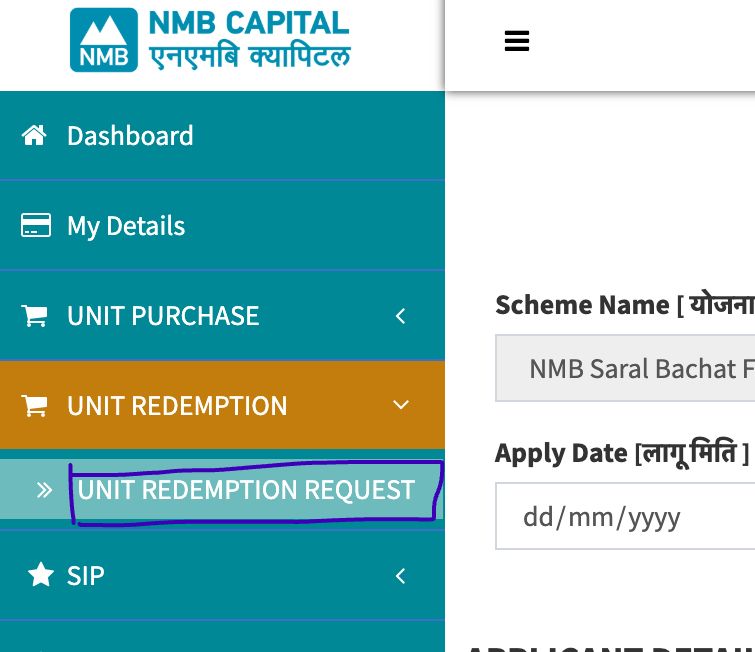
- Under UNIT REDEMTION REQUEST Page, scroll down and find ALLOTMENT DETAILS Section,
- Here you will see the total Units of SIP That you hold as of now under Balance Unit,

- That’s all.
Why this is the best method: This portal doesn’t just show you how many units you own. In addition, it calculates your total invested amount. The portal shows your current portfolio value based on today’s NAV (Net Asset Value), and your overall profit or loss percentage. As a result, it gives you the complete financial picture.
Method 2: Checking Through MeroShare
Every single investor in Nepal knows MeroShare. Since your mutual fund units are deposited directly into your Demat account, MeroShare is a fantastic, quick way to verify that your monthly purchases are actually going through.
If you just want a quick glance and are wondering how to check my sip portfolio on the go, here is the process:
- Open the MeroShare App or Website: Log in using your DP (Depository Participant), username, and password.
- Go to ‘My Portfolio’: Click on the portfolio tab on the main menu.
- Find Your Scheme: Scroll down until you see the ticker symbol for your mutual fund (for example, NFCF for Nabil Flexi Cap Fund or NIBLSF for NIBL Sahabhagita Fund).
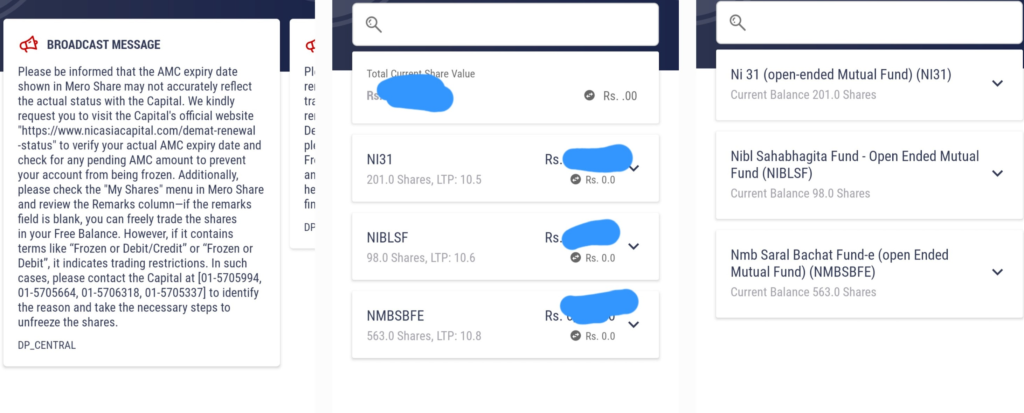
The Catch with MeroShare: MeroShare is great for confirming that you received your units this month. However, it only calculates the current value based on the “LTP” (Last Traded Price). It does not show you a detailed breakdown of how much cash you have invested over the years versus your actual compound growth. So, for the deep math, always use Method 1.
What Numbers Should You Actually Care About?
When you finally log in and figure out how to check my sip portfolio, you will see a lot of data. Don’t get overwhelmed. You only need to pay attention to three things:
- Total Units Accumulated: This is how many “shares” of the mutual fund you currently own.
- Current NAV (Net Asset Value): This is the price tag of one single unit today.
- Total Current Value: This is simply your Total Units multiplied by the Current NAV. If you sold everything today, this is roughly the amount of cash that would hit your bank account.
A Warning About Checking Too Often
Now that you know exactly how to check my sip portfolio, here is a piece of crucial investing advice: don’t look at it every single day.
The stock market goes up and down constantly. If you check your dashboard every morning, you will see your portfolio value drop on red market days. This can cause unnecessary panic. The entire point of a Systematic Investment Plan is to invest for the long term—five, ten, or fifteen years. Therefore, set a calendar reminder to check your portfolio just once every three to six months to make sure your bank mandates are firing correctly. After that, you can close the app.
Conclusion
Taking control of your finances is truly easy using the different available methods, such as how to check my SIP portfolio. Whether you want to take basic details of your SIP portfolio or need a complete breakdown of its details, it’s all possible through the capital manager website. So, I hope you are now clear on tracking your SIP Portfolio. At last, track your progress, stay disciplined with your monthly payments, and let the market do the heavy lifting for your future.