
A fixed deposit (FD) is a bank or financial institution deposit with a stated interest rate and term. This calculator estimates interest and maturity value from the figures you enter. For the maturity option, it assumes quarterly compounding; actual payout frequency, tax deductions and early-withdrawal rules depend on the product you choose. Use the result to compare scenarios, then check the institution’s current rate sheet and deposit agreement.
FD Calculator Nepal
FD estimate with a quarterly compounding assumption · Adjustable TDS · Early-withdrawal estimate · Payout options
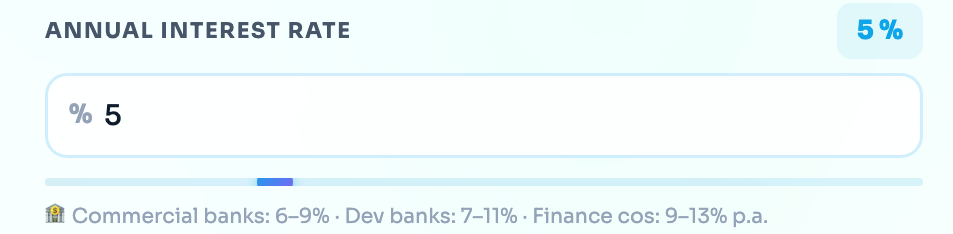
Enter the rate quoted for your deposit and tenure by your bank; rates change.
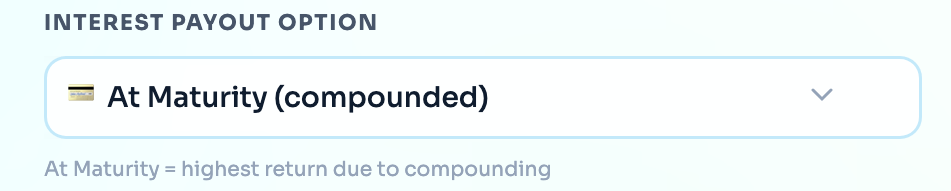
At Maturity = highest return due to compounding
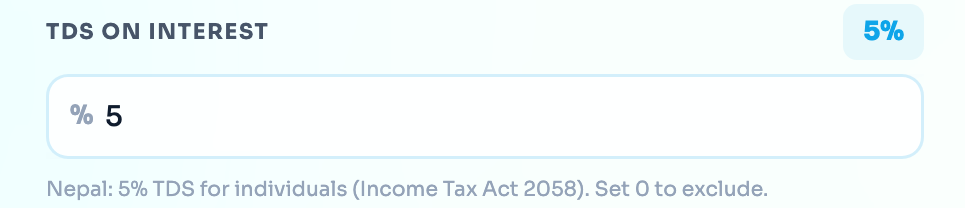
The default 5% is an illustration for eligible individual deposit interest. Confirm the rate that applies to you.
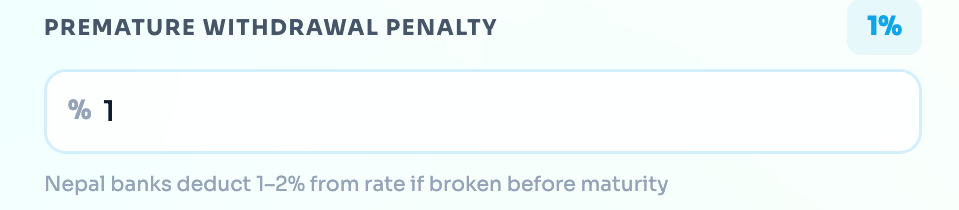
Early-withdrawal terms vary by bank and product. Enter the rate reduction in your deposit agreement.
💳 Periodic Payout Amount
Closing compounds full interest. TDS is accrued here and deducted in net maturity.
| Period | Opening | Interest | TDS | Closing |
|---|---|---|---|---|
| Click Calculate to see breakdown | ||||
Click Calculate to see breakdown
How to use the FD Calculator
Enter your intended deposit, the annual rate quoted for the same tenure, and the number of months you plan to keep the deposit. Then choose whether interest is paid at maturity or at intervals. The calculator shows a model; it cannot know a bank’s exact crediting dates, special rates, tax status or penalties.
Step 1: Enter Your Principal Amount
- Principal Amount (NPR): This is your initial investment. Type in the total lump sum amount that you plan to deposit into the FD account. Here, for reference, we set it as 10,00,000 (10 Lakh or 1 Million)

Step 2: Set Your Interest Rate
- Annual interest rate: Use the rate your bank currently quotes for this exact deposit type and tenure. Compare rates on the same payout basis; an advertised headline rate may apply only to certain customers or terms.
- Rate comparison: Check the effective return after the selected payout schedule and applicable withholding tax.
- Product terms: Review early-withdrawal conditions, minimum deposit, renewal instructions and any special-rate eligibility before opening the FD.
Step 3: Choose Your Tenure
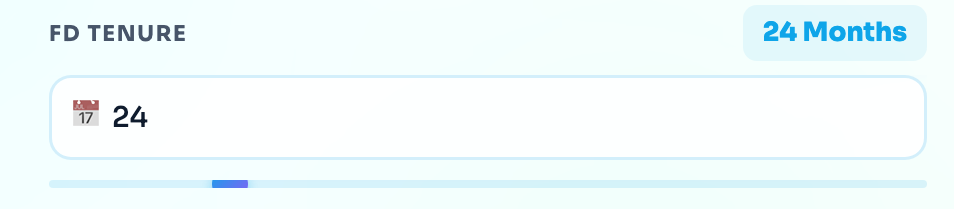
- FD tenure: Enter the term in months. For example, two years is 24 months. Use the same term when comparing bank quotes, since the offered rate can vary with the deposit period.
Step 4: Select Your Payout Preference
- Interest payout option: Choose the schedule stated in the bank’s product terms. At-maturity compounding in this tool assumes interest stays in the deposit and is compounded quarterly. Periodic payout options model cash paid out instead. The actual schedule and calculation method may differ.
- If you need regular income, compare the periodic cash payments with the maturity amount under the bank’s quoted terms. A higher modeled maturity value is not the only consideration.
Step 5: Factor in the Taxes
- TDS on interest: The field defaults to 5%, which Nepal’s Inland Revenue Department lists for qualifying deposit interest paid to a resident individual outside business activity. Other circumstances can differ. Check the current rule and your bank’s deduction, and change the field if needed. Setting it to 0 shows a gross, pre-tax illustration—not a claim of tax exemption.
Step 6: Consider the Premature Penalty (Optional)
- Early withdrawal: Whether you can close an FD before maturity, how to request it and the resulting interest adjustment depend on the bank and product. Enter the rate reduction from your deposit terms to see an illustration. The estimate is not a bank quote; ask the institution for the actual settlement amount.
Step 7: Review the estimate. Select “Calculate FD Returns” to see modeled gross interest, withholding tax and net maturity value. Recheck the entered rate, tenure, payout method and bank terms before using the result to compare products.
These results are estimates only. Confirm the current interest rate, tax treatment, eligibility, and deposit terms directly with the relevant bank or financial institution. See our Financial Disclaimer.